
What Are Sprouts?
Sprouts are seeds that have germinated and begun producing a young root and shoot. They are harvested very early in the plant's development, often only a few days after germination.
Sprouts are commonly grown in moist conditions rather than in a traditional growing medium. Because they are harvested so early, the entire young plant is generally consumed. This can include the seed, developing stem, and root.
How Sprouts Grow
Sprouting begins when seeds are exposed to moisture. The seed absorbs water and begins the germination process, eventually producing a small root and shoot.
The process is relatively quick. Once the sprouts reach the desired stage, they can be harvested and prepared for consumption.
Because they are harvested so soon after germination, sprouts do not usually develop the recognizable leaves associated with microgreens.
What Are Microgreens?
Microgreens are young plants that are allowed to grow beyond the initial sprouting stage. They are generally harvested after the plant has developed its cotyledons and may have begun developing its first true leaves.
Unlike sprouts, microgreens are generally grown with the support of a growing medium. The young plants develop stems and leaves before the above-medium portion is harvested.
This additional growing time gives microgreens their recognizable appearance. Depending on the variety, they can have different leaf shapes, colors, flavors, and textures.
Microgreens are commonly used as ingredients, toppings, and finishing touches. They can add freshness and visual appeal to everything from simple breakfasts to more elaborate meals.
How Microgreens Grow
Microgreens begin with seeds just like sprouts, but their development continues for a longer period.
After germination, the plants are given time to grow stems and leaves. The exact growing period can vary depending on the variety and growing conditions.
The growing environment can also influence the consistency and quality of microgreens. Controlled environment agriculture is one modern approach that allows growers to carefully manage the conditions throughout the growing cycle.
The Main Difference Between Sprouts and Microgreens
The most important difference between sprouts and microgreens is their stage of development when they are harvested.
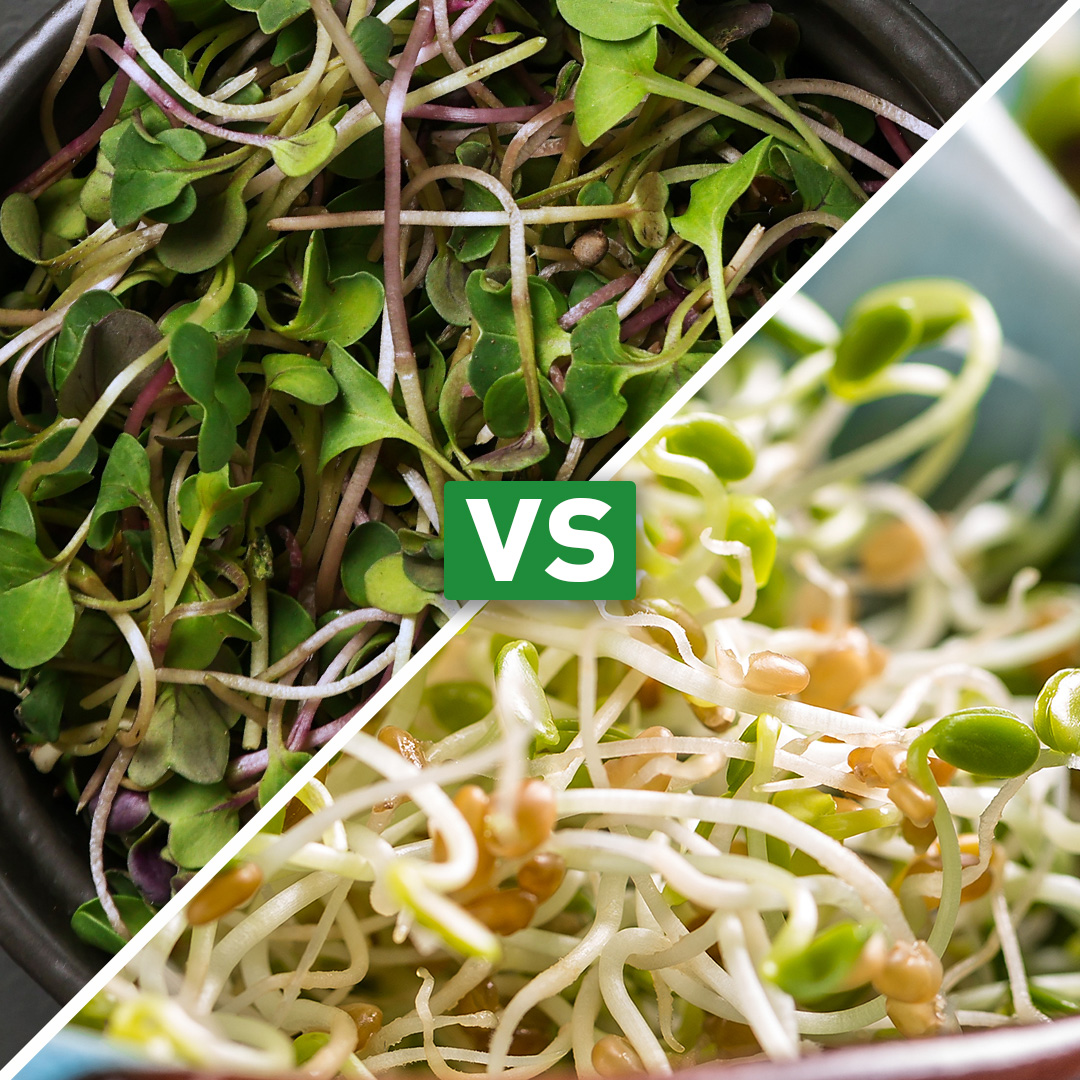
Sprouts are harvested shortly after germination, while microgreens are allowed to grow further before harvesting. This means microgreens have more developed stems and leaves, while sprouts are still in the earliest stages of plant growth.
There is also a difference in how they grow.. Sprouts are commonly grown in moist environments without a traditional growing medium. Microgreens are generally grown on a medium that provides support as the plants develop.
The part of the plant that is consumed is another distinction. With sprouts, the entire young plant is typically eaten. With microgreens, the stems and leaves are cut above the growing medium, leaving the roots behind.
Growing Time and Harvest Stage
Sprouts have a very short growing cycle and can be ready within several days. Microgreens require more time because they are allowed to develop further before harvesting.
There is not one universal harvest time for every microgreen. Different varieties develop at different rates, and growers may harvest according to the desired characteristics of the crop.
The important distinction is that microgreens are intentionally grown beyond the initial sprouting stage.
Appearance and Structure
Sprouts typically have a small developing root and shoot, sometimes with the original seed still visible. Microgreens generally have recognizable stems and leaves.
Microgreens can also display a greater range of colors and shapes, depending on the variety. This makes them especially attractive as a finishing ingredient for meals.
Flavor and Texture: Sprouts vs Microgreens
Sprouts are often crisp, juicy, and delicate. Their texture is one of their defining qualities and makes them particularly useful when a dish needs a fresh crunch.
Microgreens can offer a wider range of flavors and textures. Since different varieties have their own characteristics, there is plenty of variety to explore.
Nutritional Differences
Both sprouts and microgreens can provide nutrients and plant compounds as part of a varied diet. However, their nutritional composition can vary considerably.
The specific plant variety, growing conditions, and harvest stage can all influence the nutrients and naturally occurring compounds present in the finished product.
Microgreens have attracted attention because some varieties can contain notable concentrations of certain vitamins, minerals, and plant compounds.
How to Use Sprouts and Microgreens
Sprouts and microgreens can both be incorporated into everyday meals, but their different characteristics make them suitable for different applications.
Sprouts work especially well in dishes where their crisp texture can remain noticeable. They can be layered into sandwiches, added to wraps, or mixed into salads.
Microgreens are highly versatile and can be used as either an ingredient or a finishing touch.
Popular Ways to Enjoy Microgreens
Microgreens can be added to:
- Fresh salads
- Sandwiches and wraps
- Smoothies
- Grain and protein bowls
- Soups
- Cooked meals as a fresh topping
Their delicate texture and variety of flavors make them an easy ingredient to experiment with.
Freshness and Handling Matter
Whether you choose sprouts or microgreens, freshness and proper handling are important considerations.
For microgreens in particular, freshness can have a noticeable effect on texture and flavor. Proper refrigeration and storage can help maintain their quality after harvesting.
Understanding the Difference Between Sprouts and Microgreens
The difference between sprouts and microgreens comes down primarily to their growing process and stage of harvest.
At The People's Farm, we specialize in growing fresh microgreens in a controlled environment in Las Vegas. Our growing process uses hemp mats and water and oxygen, reflecting our focus on innovative and natural farming practices.
Whether you are comparing sprouts and microgreens for the first time or looking for new ways to enjoy fresh greens, understanding how they differ can help you choose the option that best suits your meals, taste, and lifestyle.