
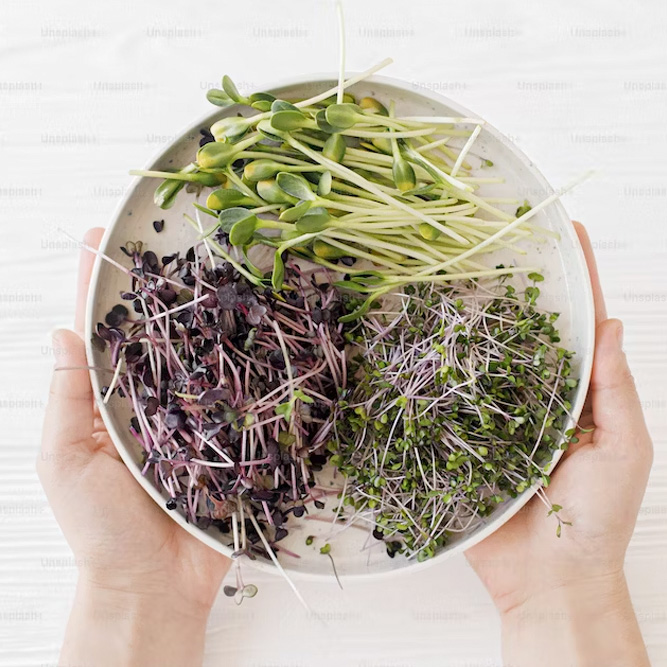
Why Knowing Different Types of Microgreens Matters
Not all microgreens taste or feel the same. Some are mild and tender, some are crisp and hearty, and some are naturally sweet. Understanding the differences can help you choose the best microgreens for your meals.
The right variety can completely change a dish. A mild microgreen can blend easily into a smoothie, a crunchy one can make a sandwich more satisfying, and a sweet one can brighten a salad or bowl.
Flavor, Texture, and Nutrition Make Each Variety Unique
When choosing between different types of microgreens, think about three things: flavor, texture, and nutrition. Each variety also brings plant-based nutrients to your plate, including vitamins, minerals, antioxidants, and naturally occurring plant compounds. Adding a mix of microgreens to your routine is an easy way to enjoy more color and variety in your meals.
Broccoli Microgreens
Broccoli microgreens are one of the most popular microgreen varieties for people who want a mild flavor and a strong nutritional profile. They are tender, delicate, and easy to use in both simple and creative dishes.
Flavor Profile and Nutritional Benefits
Broccoli microgreens have a clean, mild, slightly earthy flavor. They are not as strong as mature broccoli, which makes them easy to enjoy raw.
They are especially known for containing sulforaphane, a naturally occurring compound found in broccoli plants. Broccoli microgreens also contain vitamins, minerals, and antioxidants that can support a balanced, plant-rich diet.
Because their flavor is gentle, they are a great choice for people who are new to microgreens or want a nutritious green that does not overpower a meal.
Best Uses for Broccoli Microgreens
Broccoli microgreens are very versatile. Add them to smoothies, salads, wraps, sandwiches, grain bowls, avocado toast, or fresh vegetable plates.
They also work well as a finishing touch for warm dishes. Sprinkle them over soups, roasted vegetables, eggs, or rice bowls just before serving to keep their fresh texture and flavor.
If you want a microgreen that is mild, nutrient-rich, and easy to use every day, broccoli microgreens are a great place to start.
Sunflower Microgreens
Sunflower microgreens are loved for their hearty crunch and mild nutty flavor. They feel more substantial than many delicate greens, which makes them especially satisfying in meals.
Flavor Profile and Nutritional Benefits
Sunflower microgreens have a fresh, nutty taste and a crisp bite. Their texture makes them perfect for adding crunch without needing croutons or heavier toppings.
They are also known for offering plant-based protein, vitamins, minerals, and antioxidants. Because they are both flavorful and filling, sunflower microgreens are a great option for anyone looking to make meals feel fresher and more complete.
Best Uses for Sunflower Microgreens
Sunflower microgreens are excellent in salads, sandwiches, wraps, and bowls. They pair well with avocado, hummus, cucumber, tomato, eggs, grains, and roasted vegetables.
They can also be blended into smoothies when paired with fruit, coconut water, citrus, or creamy ingredients. For warm dishes, add them at the end so they keep their crunch and fresh flavor.
If you enjoy texture, sunflower microgreens are one of the best varieties to keep on hand.
Sugar Pea Microgreens
Sugar pea microgreens are tender, sweet, and refreshing. Their bright flavor makes them one of the easiest microgreens to enjoy, especially for people who prefer a softer, naturally sweet green.
Flavor Profile and Nutritional Benefits
Sugar pea microgreens have a light, sweet flavor similar to fresh peas. They are tender but still crisp enough to add texture to salads, sandwiches, and bowls.
They are known for containing vitamins, fiber, and plant-based nutrients that can support everyday wellness. Their sweetness also makes them a great choice for balancing stronger or richer ingredients.
Best Uses for Sugar Pea Microgreens
Sugar pea microgreens are delicious in salads, smoothies, wraps, bowls, and fresh side dishes. They pair beautifully with avocado, citrus, cucumber, grains, eggs, and light dressings.
They are also a great microgreen for smoothies because their flavor blends well with fruit, mint, coconut water, and creamy ingredients. Their fresh sweetness helps create a light, clean-tasting drink.
If you want a microgreen that feels bright and refreshing, sugar pea microgreens are a perfect choice.
Choosing the Right Microgreens for Your Diet
The best microgreens for you depend on the meals you enjoy most.
Choose broccoli microgreens when you want something mild and nutrient-rich. Choose sunflower microgreens when you want crunch and a nutty bite. Choose sugar pea microgreens when you want a sweet, tender green that feels fresh and light.
Best Microgreens for Smoothies, Salads, and Everyday Meals
For smoothies, broccoli microgreens and sugar pea microgreens are excellent because they blend easily and have gentle flavors.
For salads, all three varieties work well. Broccoli microgreens add mild freshness, sunflower microgreens bring crunch, and sugar pea microgreens add sweetness.
For sandwiches and wraps, sunflower microgreens and sugar pea microgreens are especially satisfying because they add texture and freshness.
For bowls and dinner plates, use any of the three as a finishing touch to make the meal more colorful, flavorful, and nourishing.
Conclusion
Broccoli, sunflower, and sugar pea microgreens are three fresh and versatile types of microgreens that can make everyday meals more exciting. Each variety brings something different: broccoli microgreens are mild and nutrient-rich, sunflower microgreens are crunchy and nutty, and sugar pea microgreens are sweet and refreshing.
At The People’s Farm, we’re proud to grow high-quality microgreens for the Las Vegas Valley using hemp mats and a clean water-focused process. Whether you add them to smoothies, salads, sandwiches, bowls, or warm dishes, microgreens are a simple way to bring more color, flavor, and freshness to your table.