
Understanding the Cost of Microgreens
Microgreens may look simple, but producing high-quality microgreens takes care, consistency, and attention to detail. They are harvested while young and tender, which means freshness and timing matter.
Unlike many mature vegetables, microgreens are delicate and have a shorter window for peak quality. They must be grown, harvested, packed, and handled carefully so they arrive fresh, crisp, and full of flavor.
Why Do Microgreens Cost More?
Microgreens often cost more because they require a focused growing process and careful handling. Since they are harvested young, each tray produces a smaller finished yield than a mature vegetable crop.
They also require high-quality seeds, clean growing materials, controlled conditions, and close monitoring. The goal is not just to grow greens quickly, but to grow them at the right stage for flavor, texture, and freshness.
When you buy microgreens, you are paying for a concentrated fresh food that is ready to use and easy to add to your daily meals.
Nutritional Value of Microgreens
One of the biggest reasons people choose microgreens is their nutritional value. Microgreens are harvested early in the plant’s growth, when their flavor and nutrients are concentrated. This makes them an efficient way to add more plant-based nutrition to meals without needing a large serving.
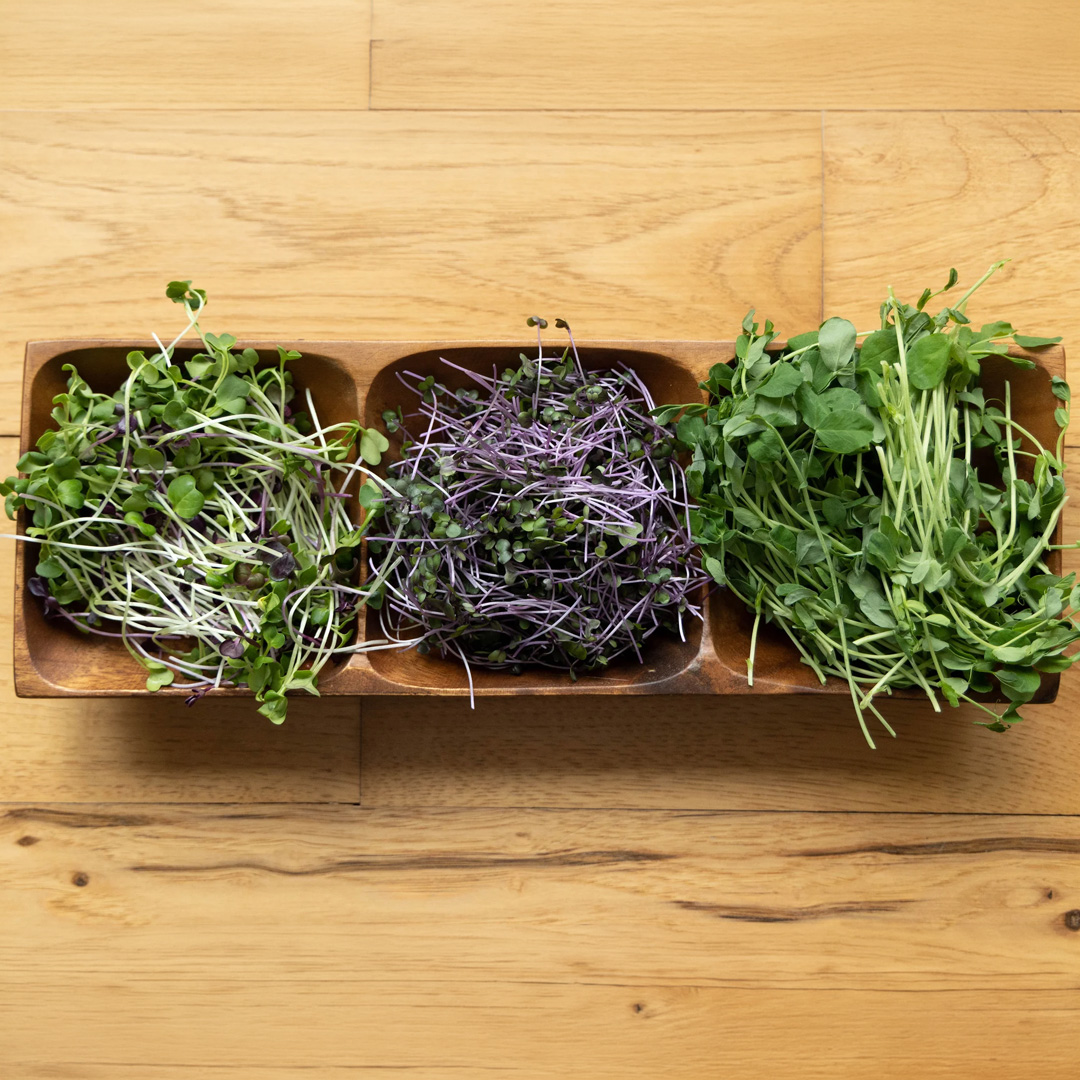
Different varieties offer different nutritional profiles. Broccoli microgreens, sunflower microgreens, and sugar pea microgreens each bring their own benefits, flavor, and texture to the table.
How Microgreens Compare to Mature Vegetables
Mature vegetables are still an important part of a balanced diet, but microgreens offer something different. They provide fresh flavor and concentrated nutrition in a small, easy-to-use form.
For example, broccoli microgreens have a milder texture than mature broccoli and can be eaten raw in salads, wraps, and smoothies. Sunflower microgreens add crunch without needing to be cooked. Sugar pea microgreens bring a naturally sweet flavor that works beautifully in fresh dishes.
Microgreens do not replace vegetables, but they are a simple way to add more variety, color, and nutrients to your plate.
Culinary Benefits of Microgreens
Microgreens are not just nutritious. They also make food taste and look better. Their fresh flavor and delicate appearance can turn simple meals into something more vibrant.
Whether you are preparing a quick lunch or plating a special dinner, microgreens add a finishing touch that feels fresh and intentional.
Easy Ways to Use Microgreens in Meals
Microgreens are one of the easiest ingredients to add to your routine because they require little preparation. You can use them raw, blend them into drinks, or add them at the end of cooking for a fresh finish.
Try sunflower microgreens in sandwiches, wraps, quinoa bowls, or salads. Add sugar pea microgreens to smoothies, spring rolls, omelets, or fresh sides. Use broccoli microgreens in green juices, bowls, avocado toast, or as a mild topping for soups and roasted vegetables.
The Everyday Value of Microgreens
While microgreens may cost more than some traditional vegetables, their value comes from how much they add to your meals.
A small container can be used across several meals, especially when added as a topping, garnish, salad mix-in, or smoothie ingredient.
Cost vs. Benefit
When comparing cost, it helps to think beyond size. Microgreens are not meant to be used exactly like a head of lettuce or a bunch of kale. They are more concentrated, delicate, and flavorful.
A handful can upgrade a sandwich, brighten a smoothie, add crunch to a bowl, or make a salad more interesting. Because they are ready to use and easy to enjoy, they can also help reduce the effort of eating healthier meals.
A Simple Investment in Better Eating
Microgreens make healthy eating feel easier and more enjoyable. Instead of completely changing your routine, you can simply add them to foods you already love.
They are especially helpful for busy people who want fresh ingredients without complicated prep. A few handfuls throughout the week can bring more color, texture, and plant-based nutrition into your meals.
Where to Buy Quality Microgreens
If you are looking for microgreens for sale, freshness should be one of your top priorities. High-quality microgreens should look vibrant, smell fresh, and have a clean, crisp texture.
Buying from a local farm can also help you enjoy microgreens closer to harvest, when their flavor and texture are at their best.
What to Look for in Fresh Microgreens
Look for microgreens that are bright in color, not wilted, and stored properly. The leaves should look lively, and the stems should feel fresh rather than soggy.
It also helps to choose a supplier that is transparent about how the microgreens are grown. Clean growing practices, careful harvesting, and proper storage all make a difference in the final product.
Why Choose The People’s Farm Microgreens
At The People’s Farm, we grow fresh microgreens for the Las Vegas Valley using hemp mats and a clean water-focused cultivation process. Our microgreens are grown with care in a controlled environment designed for quality and consistency.
We focus on flavorful, versatile varieties like broccoli microgreens, sunflower microgreens, and sugar pea microgreens. Whether you are adding them to smoothies, salads, sandwiches, bowls, or dinner plates, our microgreens are grown to make fresh eating simple and enjoyable.
Conclusion
So, are microgreens worth it? For many people, the answer is yes. Microgreens offer concentrated nutrition, fresh flavor, beautiful presentation, and everyday convenience in one small ingredient. Broccoli, sunflower, and sugar pea microgreens are easy to use, delicious, and versatile enough to fit into meals throughout the week. When you choose fresh microgreens from The People’s Farm, you are choosing a simple way to bring more color, nourishment, and freshness to your table.